
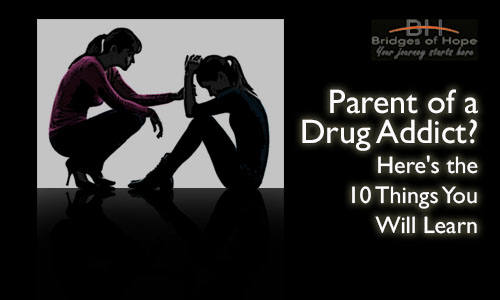
With addiction, the home becomes a battleground, where every day, family members struggle for control, order, peace, a sense of sanity, and a way out of the downward spiral, a way to save their addicted child. For parents of a drug addict, the pain, worry, love, and despair is incomparable. You want to take away their pain, yet you don’t want to take their only source of joy away, either.
Let’s face it. It’s easy to judge other people who have succumbed to drugs or alcohol–until it hits close to home.
Addiction is never easy for parents who see their children wither away and become a stranger to their own family. Where was that child you once taught how to ride the bike and hugged you so earnestly? What were those little hands doing now, those hands that you used to stroke as you put them to sleep? How can someone you love so dearly and have high hopes for turn out like this? These and more questions may pop into your mind as you undergo the daily struggle of dealing with your child.
Here are the 10 things you learn when you are a parent of a drug addict:
1. Addiction is a disease. Alcohol and drug addiction is not a choice. Although they may have chosen to use or drink, they are powerless over becoming addicted. While this is a hard concept to understand, especially with the stigma surrounding addiction, this disease is not a moral failing or a lack of willpower. Addiction is a disease that changes the way their brains work and how they function. Often, the best resort to treat addiction is to get professional help.
2. Addiction is a family disease. Addiction does not affect only the addict. It affects the family members too, from the parents to the addict’s own kids. In order for the addict to turn away from drugs or alcohol and live a life of sobriety, the family must work together and be in on the program too.
3. Don’t let emotions get in the way. Think with your head, and not with your heart. It is perfectly understandable that parents’ first instinct is to soothe, love, and protect their children from any harm or pain. However, things are different when you’re dealing with addiction. You have to learn to love them while still loving yourself, setting boundaries and sticking by them. You have to stop enabling and start giving them the real help they need for them to be spurred to change.
4. They lie. There’s a saying, “If their lips are moving, they’re probably lying.” And for addicts, this is true. Addicts would lie, cheat, deceive, and twist things in order for them to get what they want–which is, at the end of the day, their substance of choice.
5. It helps to be equipped with knowledge. Learned about the substance they are addicted to. Learn about the signs and symptoms of their addiction. Learn about the health and other repercussions of the drug or alcohol they are taking. Different substances have different effects to the body and the mind. Also, learn about your options, such as taking your child to a treatment or rehab facility.
6. Pain is at the bottom of all addictions. While your child may grow up in the most loving home in the world, you can only control what you can. You can’t follow your child outside the home, and the world, in all its beauty, can also cause a lot of pain.
7. Social media is a bad influence. Young children exposed to social media can see photos of their friends or acquaintances partying, drunk, passed out, and even abusing drugs. This might give your children the impression that this is normal or acceptable, and they may even be encouraged to try it out themselves. You have to learn to set boundaries when it comes to what your children are exposed to in the Internet.
8. Counter-manipulation is your friend. Substance abusers and addicts are prone to manipulate the people around them so that they get what they want. Your child may do the same to you. Avoid enabling them by being careful with your responses. Instead of agreeing or outrightly disagreeing with them, respond with phrases like, “I see,” “Is that so?” “Really?” and “Let me think about that first and I’ll get back to you.”
9. Don’t succumb to invitations to argue. Heated arguments and fights that instantly escalate are common in a household where there are addicts. Know when to walk away from a causeless, or hopeless, battle.
10. There is help available. Know what your options are and decide with conviction if you need to subject your child to intervention or a treatment program. There are different options available that will suit your specific needs, so feel free to reach out.
You are not alone in your struggle. There are also other parents out there who are going through the same thing. Feel free to share your stories in the comments section below.
Is your child struggling with addiction? Talk to us on how we can help. Call or text our confidential helpline at 09175098826.
Recent Comments